PET-CT Scan: How It Helps in Early Cancer Detection
Oct 30, 2024
Colon cancer, also known as colorectal cancer, is one of the most rapidly increasing cancers in India. While it was once considered a disease affecting older adults, recent trends show that even younger individuals are being diagnosed. The biggest concern, however, is that many patients in India are diagnosed at advanced stages—significantly affecting survival rates.
The good news? Colon cancer is highly treatable when detected early. With timely screening, awareness of symptoms, and access to advanced oncology care, survival outcomes can improve dramatically.
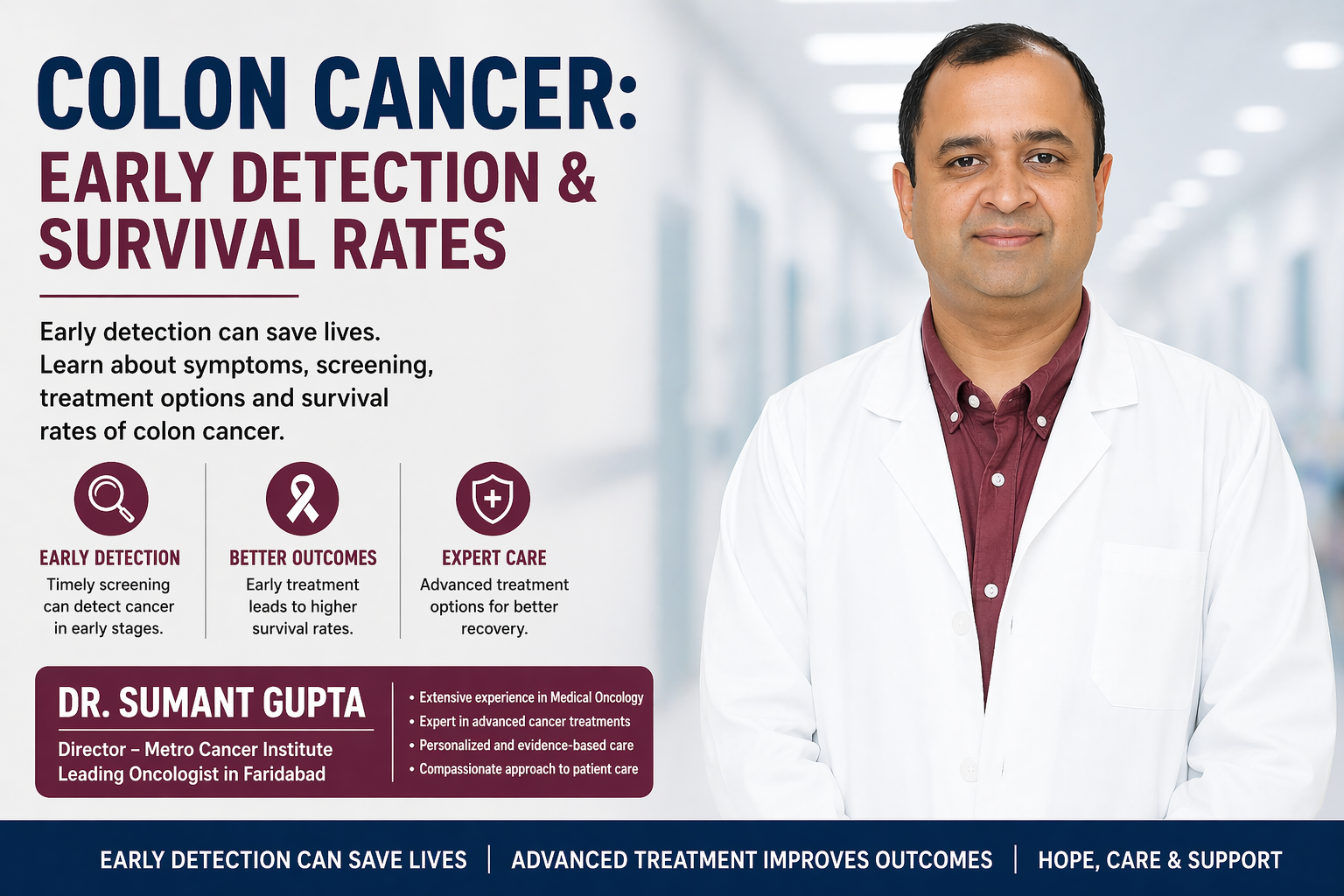
At Metro Cancer Institute, Faridabad, under the guidance of best Oncologist in Faridabad, Dr. Sumant Gupta (Director – Metro Cancer Institute & Senior Oncologist), patients receive comprehensive, evidence-based cancer care with a strong focus on early diagnosis and personalized treatment.
Colon cancer develops in the large intestine (colon), usually beginning as small, non-cancerous growths called polyps. Over time, some of these polyps can become cancerous if not detected and removed early.
Globally, colorectal cancer is among the top three most common cancers, with millions of new cases diagnosed every year . In India, although incidence rates are lower compared to Western countries, mortality remains high due to late diagnosis.
Several lifestyle and environmental factors are contributing to the increasing incidence of colon cancer:
Studies indicate that 40–50% of patients in India are diagnosed at advanced stages, which directly impacts survival outcomes .
Colon cancer often develops silently, especially in early stages. However, certain warning signs should never be ignored:
These symptoms are frequently mistaken for minor digestive issues, delaying diagnosis. Early medical consultation can be life-saving.
Early detection is the single most important factor influencing survival in colon cancer.
Research clearly shows that early-stage colon cancer has significantly better survival outcomes compared to advanced stages .
Regular screening plays a critical role in detecting colon cancer before symptoms appear.
Experts recommend screening starting at age 45, or earlier if there is a family history or risk factors.
Survival rates vary significantly depending on the stage at which cancer is diagnosed.
However, in specialized cancer centers, early-stage survival can exceed 60–70% or more with timely treatment .
👉 This clearly highlights one key message:
Early detection can double or even triple survival chances.
Modern oncology offers multiple advanced treatment options depending on the stage:
With advancements in cancer care, even advanced-stage patients can achieve long-term survival and improved quality of life .
Prevention plays a crucial role in reducing colon cancer risk.
Lifestyle changes combined with early detection can significantly reduce cancer burden.
Choosing the right oncologist is critical for accurate diagnosis and effective treatment.
At Metro Cancer Institute, Faridabad, patients benefit from:
Dr. Sumant Gupta – Director, Metro Cancer Institute & Additional Medical Director is widely recognized as one of the leading oncologists in Faridabad. With extensive expertise in medical oncology, he specializes in:
Under his leadership, Metro Cancer Institute has become a trusted center for comprehensive cancer treatment in the region.
👉 Reality: Increasing cases in younger adults
👉 Reality: Early stages are often silent
👉 Reality: Highly curable if detected early
👉 Reality: Screening saves lives
You should consult a specialist if you experience:
Early consultation can significantly improve treatment outcomes.
Colon cancer is a serious yet highly treatable disease—especially when diagnosed early. The stark difference between early-stage and late-stage survival rates highlights the importance of awareness, screening, and timely medical intervention.
With advanced oncology care now available in Faridabad, patients no longer need to travel far for world-class cancer treatment. Under the expert leadership of Dr. Sumant Gupta at Metro Cancer Institute, patients receive comprehensive care focused on early detection, advanced treatment, and improved survival outcomes.
👉 Remember:
Early detection is not just an option—it is the key to survival.
Oct 30, 2024

Oct 30, 2024
Oct 30, 2024