PET-CT Scan: How It Helps in Early Cancer Detection
Oct 30, 2024
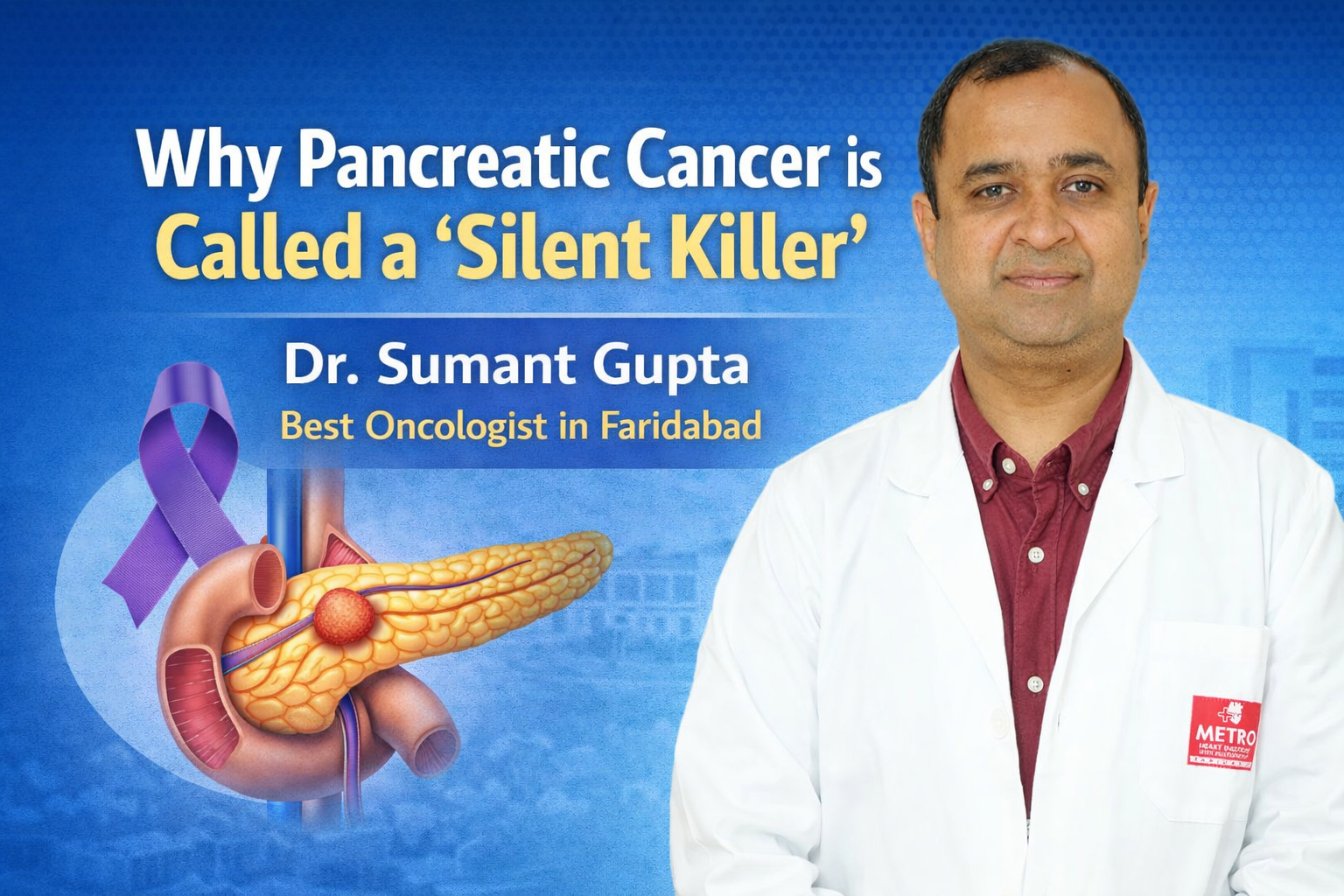
Pancreatic cancer is one of the most aggressive and life-threatening forms of cancer worldwide. Often referred to as a “silent killer,” this disease progresses quietly within the body, showing little to no symptoms in its early stages. By the time it is detected, it is frequently advanced, making treatment more challenging and reducing survival rates significantly.
In this detailed guide, we will explore why pancreatic cancer has earned this alarming title, its symptoms, causes, diagnosis challenges, and how timely intervention under Dr. Sumant Gupta, the best oncologist in Faridabad can make a crucial difference.
Pancreatic cancer develops in the tissues of the pancreas — an organ located behind the stomach that plays a vital role in digestion and blood sugar regulation. It occurs when abnormal cells grow uncontrollably and form a tumor.
This cancer is particularly dangerous because it tends to grow rapidly and spread (metastasize) to nearby organs such as the liver, lungs, and lymph nodes before it is detected.
One of the primary reasons pancreatic cancer is termed a “silent killer” is that it often does not cause noticeable symptoms in its early stages.
Patients may feel completely normal while the cancer is silently progressing inside the body. By the time symptoms appear, the disease is usually advanced.
Even when symptoms do occur, they are often non-specific and easily mistaken for common health issues like:
These vague symptoms delay diagnosis because patients often ignore them or treat them as minor problems.
Studies show that nearly 80% of pancreatic cancer cases are diagnosed at an advanced stage.
At this stage:
This late detection is one of the biggest reasons for its high mortality rate.
Unlike breast cancer (mammography) or colon cancer (colonoscopy), there is no standard screening test for pancreatic cancer in the general population.
This makes early detection extremely difficult, especially for individuals who are not in high-risk categories.
Pancreatic cancer is biologically aggressive and tends to:
This aggressive behavior further contributes to its reputation as a silent killer.
Pancreatic cancer has one of the lowest survival rates among all cancers.
These statistics highlight how deadly the disease can be when not detected early.
Although early stages may be silent, advanced pancreatic cancer may present with:
These symptoms often appear only after the cancer has progressed, making early awareness extremely important.
Certain factors can increase the risk of developing pancreatic cancer:
Understanding these risk factors can help in identifying high-risk individuals who may benefit from early screening.
Pancreatic cancer is hard to detect early due to:
Because of these challenges, doctors often rely on imaging tests like CT scans, MRI, and biopsy only after symptoms appear.
Although pancreatic cancer is aggressive, early detection can significantly improve survival chances.
This highlights the importance of:
When dealing with a complex disease like pancreatic cancer, choosing the right specialist is critical.
Dr. Sumant Gupta, one of the leading oncologists in Faridabad, is known for his expertise in:
With years of experience and access to advanced medical technology, Dr. Sumant Gupta ensures that patients receive accurate diagnosis, timely treatment, and comprehensive care.
At leading healthcare centers like Metro Hospital Faridabad, patients benefit from:
Treatment depends on the stage and overall health of the patient. Common options include:
Early consultation with experts like Dr. Sumant Gupta can help determine the best treatment plan.
While pancreatic cancer cannot always be prevented, certain lifestyle changes can reduce risk:
These steps can improve overall health and reduce cancer risk.
With advancements in medical science, new technologies are improving outcomes:
These innovations are bringing hope for better survival rates in the future.
Pancreatic cancer is called a “silent killer” because it progresses quietly, shows minimal early symptoms, and is often diagnosed at an advanced stage. Its aggressive nature and low survival rates make awareness and early detection extremely important.
However, with increasing awareness, advanced medical technology, and expert care from specialists like Dr. Sumant Gupta in Faridabad, patients now have better chances of timely diagnosis and effective treatment.
If you experience:
👉 Do not ignore these signs. Consult a cancer specialist immediately.
Oct 30, 2024

Oct 30, 2024
Oct 30, 2024