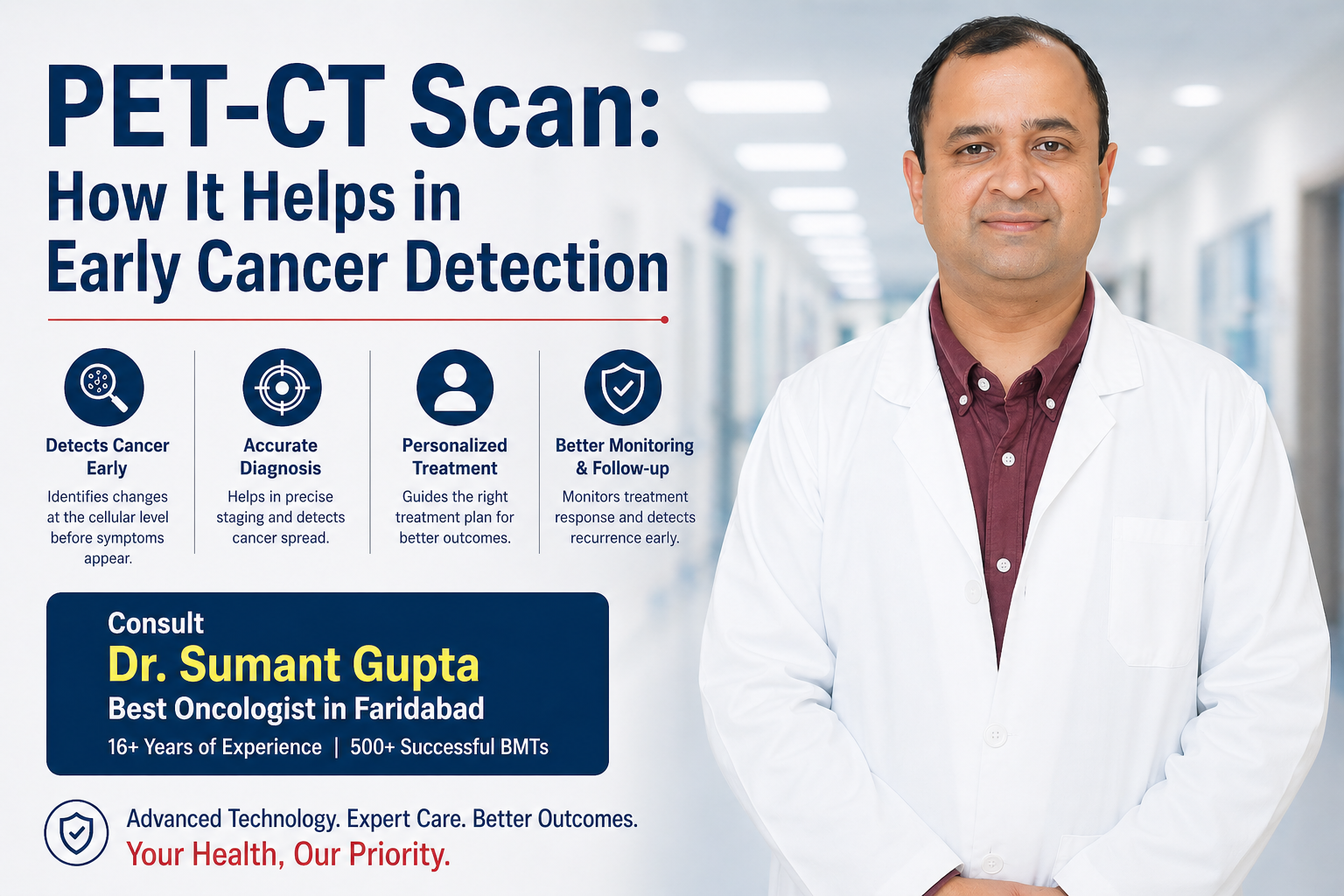
PET-CT Scan: How It Helps in Early Cancer Detection
Oct 30, 2024

A Bone Marrow Transplant (BMT)—also known as a Stem Cell Transplant—is often perceived as one of the most complex and risky cancer treatments. For patients and families, the very mention of BMT can raise fear, confusion, and countless questions about survival, complications, and life after the procedure.
So, is bone marrow transplant really risky?
The honest answer is: it is a highly specialised procedure with risks—but when done for the right patient, at the right time, under an experienced specialist, it can be life-saving and curative.
In this detailed blog, we explain BMT in simple language, discuss real survival rates, break common fears, and help you understand when and why it is recommended by Dr Sumant Gupta, the best oncologist in Faridabad.
Bone marrow is the soft, spongy tissue inside bones that produces blood-forming stem cells. These cells develop into:
Red blood cells
White blood cells
Platelets
A bone marrow transplant replaces damaged or diseased bone marrow with healthy stem cells. These stem cells may come from:
The patient (autologous transplant)
A matched donor (allogeneic transplant)
BMT is commonly advised for patients with:
Blood cancers – Leukemia, Lymphoma, Multiple Myeloma
Bone marrow failure disorders – Aplastic anemia
Genetic blood disorders – Thalassemia, sickle cell disease
Certain autoimmune or immune deficiency disorders
For many of these conditions, BMT offers the only chance of long-term survival or cure.
Yes, BMT is a high-intensity medical procedure, but calling it “dangerous” without context is misleading.
The risk depends on multiple factors, including:
Patient’s age and overall health
Underlying disease and its stage
Type of transplant (autologous vs allogeneic)
Donor match quality
Experience of the transplant team
Infection control and post-transplant care
With advances in medical science, BMT today is far safer than it was a decade ago.
After transplant, immunity is low for a few weeks to months. Strict infection control, antibiotics, and isolation protocols greatly reduce this risk.
Seen mainly in allogeneic transplants, where donor cells react against the patient’s body. Modern immunosuppressive drugs and close monitoring help control GVHD effectively.
Temporary effects on liver, kidneys, or lungs may occur, especially during conditioning chemotherapy. These are closely monitored.
Some patients take longer to recover normal blood counts, but supportive care ensures safety during this phase.
Important: These risks are known, expected, and medically managed—not unexpected complications.
One of the most searched questions online is about survival rates after BMT. Let’s look at realistic data in simple terms.
Autologous BMT (Multiple Myeloma, Lymphoma):
✔️ 70–90% long-term survival in suitable patients
Allogeneic BMT (Leukemia):
✔️ 60–80% survival when done at the right disease stage
Aplastic Anemia / Thalassemia (Children & Young Adults):
✔️ Up to 85–90% success in well-matched transplants
Early referral for transplant
Good donor match
Strong infection control
Experienced transplant physician
Patient compliance with post-BMT care
Survival rates are continuously improving due to better drugs, donor registries, and supportive care.
This is another common fear.
Stem cell collection is not surgery
Most patients describe mild discomfort, fatigue, or body ache
The transplant itself is like a blood transfusion
Pain is well controlled with medications
The recovery phase requires patience, not pain tolerance.
Many patients worry whether they can return to a normal life.
Most patients resume daily activities within 3–6 months
Children return to school
Adults return to work
Long-term survivors live full, healthy lives
Diet, hygiene, and follow-up visits are important, but life does normalise.
BMT may not be advised if:
The patient has uncontrolled infections
Severe organ failure exists
Disease is extremely advanced without benefit
A good oncologist will never recommend BMT unless benefits clearly outweigh risks.
BMT is not just a procedure—it is a long journey involving:
Disease evaluation
Donor selection
Chemotherapy conditioning
Transplant execution
Long-term follow-up
This journey must be guided by a highly experienced oncologist and hematologist.
Dr. Sumant Gupta is widely regarded as one of the best cancer specialists and oncologists in Faridabad, with extensive expertise in:
Medical Oncology
Hematology
Bone Marrow Transplant
Blood Cancers & Solid Tumors
Known for his patient-centric and evidence-based approach, Dr. Gupta carefully evaluates every case to determine whether BMT is the right option and ensures patients receive the safest, most advanced care.
📞 Call: +91 981 862 8242
🌐 Visit: drsumantgupta.com
🏥 Consulting at: Metro Hospital, Faridabad
Bone marrow transplant is serious—but not something to fear blindly.
✔️ It is a proven, life-saving treatment
✔️ Survival rates are high when done correctly
✔️ Risks are manageable under expert care
✔️ Thousands of patients lead healthy lives post-BMT
The key lies in timely decision-making and choosing the right oncologist.
If you or your loved one has been advised a bone marrow transplant, consult an experienced specialist to understand your individual risk, benefit, and long-term outlook.
Oct 30, 2024

Oct 30, 2024
Oct 30, 2024