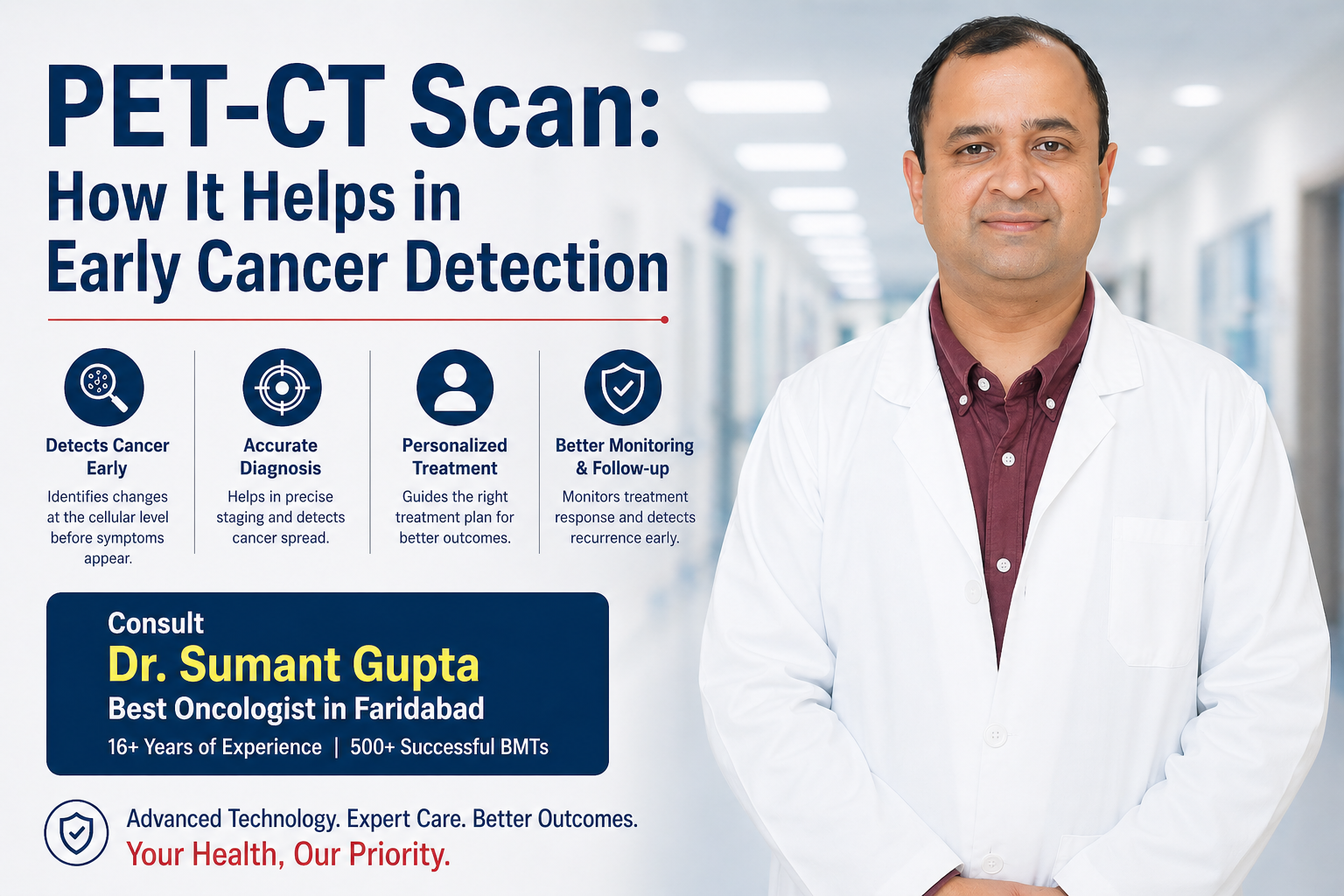
PET-CT Scan: How It Helps in Early Cancer Detection
Oct 30, 2024

Noticing a breast lump can be worrying. The first thought most people have is: “Kya yeh serious hai?” While most breast lumps are benign (non-cancerous), some can be early signs of breast cancer or other concerning conditions. The key to good outcomes is early evaluation — by the right specialist — so you get accurate diagnosis, timely treatment, and the best possible care plan.
In this blog, we’ll explain clearly:
What kinds of doctors you should see for a breast lump
Why specialist consultation matters
What to expect during evaluation
And where you can find expert care in Faridabad
If you discover a breast lump:
Call your general physician (GP) or family doctor first.
They will do an initial clinical exam and assess risk factors such as:
Age
Family history of breast cancer
Changes in skin or nipple
Pain or discharge
They may advise basic imaging or refer you to a specialist if needed.
A breast lump that doesn’t go away, changes in size, or has suspicious features on initial exam usually requires evaluation by a breast surgeon or surgical oncologist. These doctors are trained to:
Examine breast tissue thoroughly
Recommend appropriate imaging tests
Perform biopsies to confirm diagnosis
✔ Clinical breast exam
✔ Ultrasound / Mammogram recommendations
✔ Core biopsy / FNAC (Fine Needle Aspiration Cytology)
✔ Risk evaluation and staging
If the biopsy suggests cancer or pre-cancerous changes, a medical oncologist becomes part of your care team.
A medical oncologist:
Designs chemotherapy or targeted therapy plans
Decides on immunotherapy when needed
Monitors systemic treatment response
This specialist works closely with surgeons, radiation oncologists, and other experts to create a comprehensive, personalised treatment plan.
In many breast cancer treatment plans, radiation therapy is an important component — especially after surgery. A radiation oncologist:
Plans and delivers radiation
Minimises side effects
Helps prevent recurrence
Early evaluation by the right specialists:
Helps diagnose benign vs malignant lumps accurately
Improves outcomes through early treatment
Reduces unnecessary anxiety and delays
Provides personalised, evidence-based care
Here’s what doctors often recommend:
Hands-on evaluation by your doctor.
Useful for younger women and dense breast tissue.
Recommended especially for women above 40.
Most definitive test to determine if a lump is cancerous.
Used for detailed imaging when needed.
See a specialist as soon as possible if you notice:
Hard, fixed lump that doesn’t move
Lump growing in size
Nipple discharge (especially bloody)
Skin dimpling or change in contour
Pain that persists
Family history of breast cancer
These symptoms don’t always mean cancer, but they merit prompt evaluation.
If you are in Faridabad or the NCR and want expert, compassionate care for a breast lump — benign or suspicious — then Dr. Sumant Gupta is a top choice.
He is recognised as:
✔ A leading breast cancer specialist
✔ A top oncologist in Faridabad
✔ An expert in diagnosis, staging, and personalised cancer care
Dr. Gupta combines experience with cutting-edge oncology practices, ensuring every patient gets honest guidance, advanced treatment options, and emotional support through their journey.
📞 Appointment / Call: +91 981 862 8242
🏥 Senior Oncologist & Hematologist, Metro Hospital, Faridabad
🌐 For more information, you can search online for his clinic details.
Whether your lump turns out to be benign or needs cancer treatment, Dr. Sumant Gupta’s expertise will help guide your decisions and care plan.
No. Most breast lumps are benign (like cysts or fibroadenomas), but they still need medical evaluation to be sure.
Start with your GP. They can examine you and refer you to a breast surgeon or oncologist if needed.
Routine checks are often recommended from age 40, but if you have symptoms at any age, see a doctor immediately.
It depends on your age and symptoms: ultrasound for younger women; mammogram for older women; sometimes both.
Biopsy procedures are usually well-tolerated with local anaesthesia. You may feel mild pressure or discomfort.
Healthy habits like regular exercise, balanced diet, weight management, and limited alcohol intake can help lower overall cancer risk.
Still get it checked. Some benign lumps may fluctuate in size, but evaluation ensures nothing serious is missed.
Ideally within a week if you discover a lump, especially if it’s painful, growing, or associated with skin changes.
Yes. Your doctor will advise routine follow-ups to track any changes.
Yes — a strong family history of breast or ovarian cancer may increase your individual risk.
Noticing a breast lump can be uncomfortable and scary — but the best thing you can do is get it evaluated early by the right doctor. Depending on your situation, this might include a GP, breast surgeon, or cancer specialist.
If you are in the Faridabad area and want one of the most experienced breast cancer doctors with compassionate care and evidence-based treatment plans, Dr. Sumant Gupta is an excellent choice.
📞 Call +91 981 862 8242 today to take the first step toward early diagnosis and appropriate care.
Oct 30, 2024

Oct 30, 2024
Oct 30, 2024