
Prostate Cancer Symptoms in Men
Oct 30, 2024
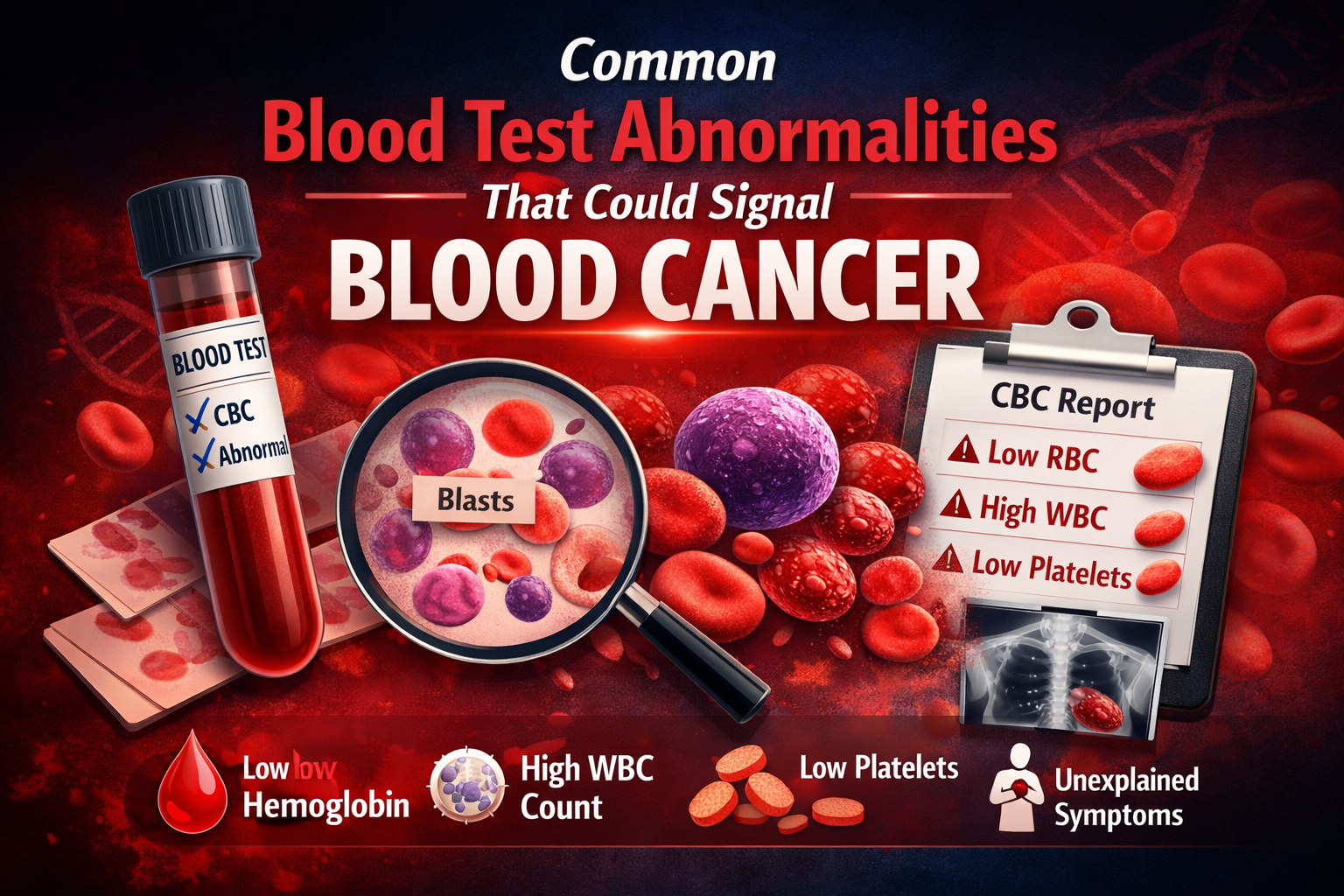
Blood tests are often the first clue that something in the body isn’t right. Many people get a Complete Blood Count (CBC) as part of a routine check-up, before surgery, or when they feel unusually tired, feverish, or weak. While most abnormal results are linked to common conditions like infection, vitamin deficiency, or inflammation, certain blood test patterns can sometimes raise suspicion for blood cancers such as leukaemia, lymphoma, and multiple myeloma.
This blog explains the common blood test abnormalities that could signal blood cancer, what they may mean, and when you should consult Dr Sumant Gupta. Best Oncologist in Faridabad for further evaluation.
Blood cancers affect the production and function of blood cells—typically starting in the bone marrow (where blood cells are made) or in the lymphatic system. Because these cancers directly influence blood cell formation, blood tests often show early changes.
Important note: An abnormal blood test does not automatically mean cancer. But it does mean you need proper medical interpretation and, if required, timely follow-up.
Low haemoglobin (Hb)
Low RBC count
Low hematocrit (PCV)
Anaemia is common and can be due to iron deficiency, B12 deficiency, heavy menstrual bleeding, or chronic disease. However, in blood cancers—especially leukaemia and multiple myeloma—anaemia can occur because the bone marrow is not producing enough healthy red cells.
Persistent anaemia despite iron/B12 treatment
Anaemia with weight loss, recurrent infections, bone pain, night sweats, or unexplained fever
High WBC count (leukocytosis)
Low WBC count (leukopenia)
White blood cells fight infections. In infections, WBC often rises and then normalises. But in certain blood cancers, WBC can become abnormally high due to uncontrolled production of abnormal cells, or abnormally low because normal cell production is suppressed.
Very high WBC count without obvious infection
Repeated infections with low WBC count
Abnormal WBC trend that persists across repeat tests
A CBC differential breaks down WBC into types:
Neutrophils
Lymphocytes
Monocytes
Eosinophils
Basophils
Unusually high lymphocytes (lymphocytosis)
Unusually low neutrophils (neutropenia)
Marked changes that persist
Some blood cancers—like chronic lymphocytic leukaemia (CLL)—can present as persistent lymphocytosis. Neutropenia can occur when bone marrow function is affected.
Persistent lymphocytosis in repeat CBCs
Neutropenia with recurrent fever/infections
Mention of “blasts”, immature cells, or atypical cells
Pathologist note recommending smear review
Normally, immature cells stay in the bone marrow. If the report shows blasts circulating in blood, it can be a significant warning sign for acute leukaemia or serious marrow stress.
Any blast percentage reported
Smear suggests “rule out leukaemia”
Sudden severe weakness, fever, bleeding, or breathlessness with abnormal CBC
Low platelets (thrombocytopenia)
Sometimes high platelets (thrombocytosis)
Platelets help with clotting. In blood cancers—especially leukaemia—platelet counts can drop because the marrow gets crowded with abnormal cells. Some myeloproliferative disorders can raise platelet counts.
Easy bruising, gum bleeding, nosebleeds
Tiny red spots on skin (petechiae)
Heavy periods or bleeding that seems unusual
Low Hb (anaemia)
Low WBC
Low platelets
When all three blood cell lines are reduced, it suggests bone marrow suppression or infiltration. Causes may include severe infection, certain medicines, aplastic anaemia, or blood cancers.
Fatigue + recurrent infections + bleeding/bruising together
Persistently low counts on repeat tests
High ESR
Raised CRP
ESR and CRP rise in inflammation and infection. But very high ESR with symptoms like bone pain, weakness, weight loss, and recurrent infections can sometimes be seen in multiple myeloma and other malignancies.
ESR is consistently high with anaemia
Bone pain (especially back/ribs), frequent infections, unexplained fatigue
These are often seen in LFT (Liver Function Test) or metabolic panels.
High total protein
High globulin
Low albumin (in some cases)
Low A/G ratio
In multiple myeloma, abnormal plasma cells produce a large amount of one type of protein (monoclonal protein), which can raise total protein or globulin levels.
High protein with anaemia and bone pain
Raised creatinine (kidney impact)
Recurrent infections
High calcium
High creatinine / reduced kidney function
Sometimes low sodium or other electrolyte issues
Multiple myeloma can cause bone breakdown (raising calcium) and kidney strain (raising creatinine).
Bone pain + weakness + frequent urination + constipation (possible high calcium)
Swelling, reduced urine output, or worsening kidney numbers
High LDH
High uric acid
LDH can rise when there’s high cell turnover. It’s often used in evaluation of lymphomas and leukaemias, along with other tests.
Unexplained fever, night sweats, weight loss (“B symptoms”)
Enlarged lymph nodes with high LDH
You should consult an oncologist/haematologist if:
Abnormal CBC persists on repeat testing (after 1–3 weeks or as advised)
There are multiple abnormalities together (Hb + WBC + platelets)
Peripheral smear shows blasts or atypical cells
Symptoms accompany abnormal reports:
unexplained fever, night sweats, weight loss, persistent fatigue, frequent infections, easy bruising/bleeding, bone pain, enlarged lymph nodes
Early evaluation can prevent delays and helps rule out serious causes quickly.
Depending on your report and symptoms, your doctor may advise:
Repeat CBC with peripheral smear
Iron, B12, folate studies
Reticulocyte count
LDH, uric acid, ESR/CRP
Serum protein electrophoresis (SPEP), immunofixation
Serum free light chains (for myeloma)
Imaging (if lymph nodes or bone pain)
Bone marrow aspiration/biopsy (only if needed)
Flow cytometry / cytogenetics (for confirmation and planning)
If your blood tests are persistently abnormal or you’re experiencing symptoms that need expert evaluation, consult Dr. Sumant Gupta, widely regarded as the best blood cancer doctor and best oncologist in Faridabad. He specialises in oncology, haematology, and Bone Marrow Transplant (BMT), offering advanced diagnostic guidance and personalised treatment planning for blood cancers.
📍 Book an Appointment Today
📞 Call: +91 981 862 8242
🌐 Visit: https://drsumantgupta.com/
Blood tests are powerful early warning tools—but they need expert interpretation. Many abnormal results are harmless or treatable, but certain patterns should never be ignored, especially when symptoms are present or abnormalities persist over time. If you’ve received a concerning CBC report, don’t panic—get a proper evaluation quickly.
Oct 30, 2024

Oct 30, 2024

Oct 30, 2024