PET-CT Scan: How It Helps in Early Cancer Detection
Oct 30, 2024
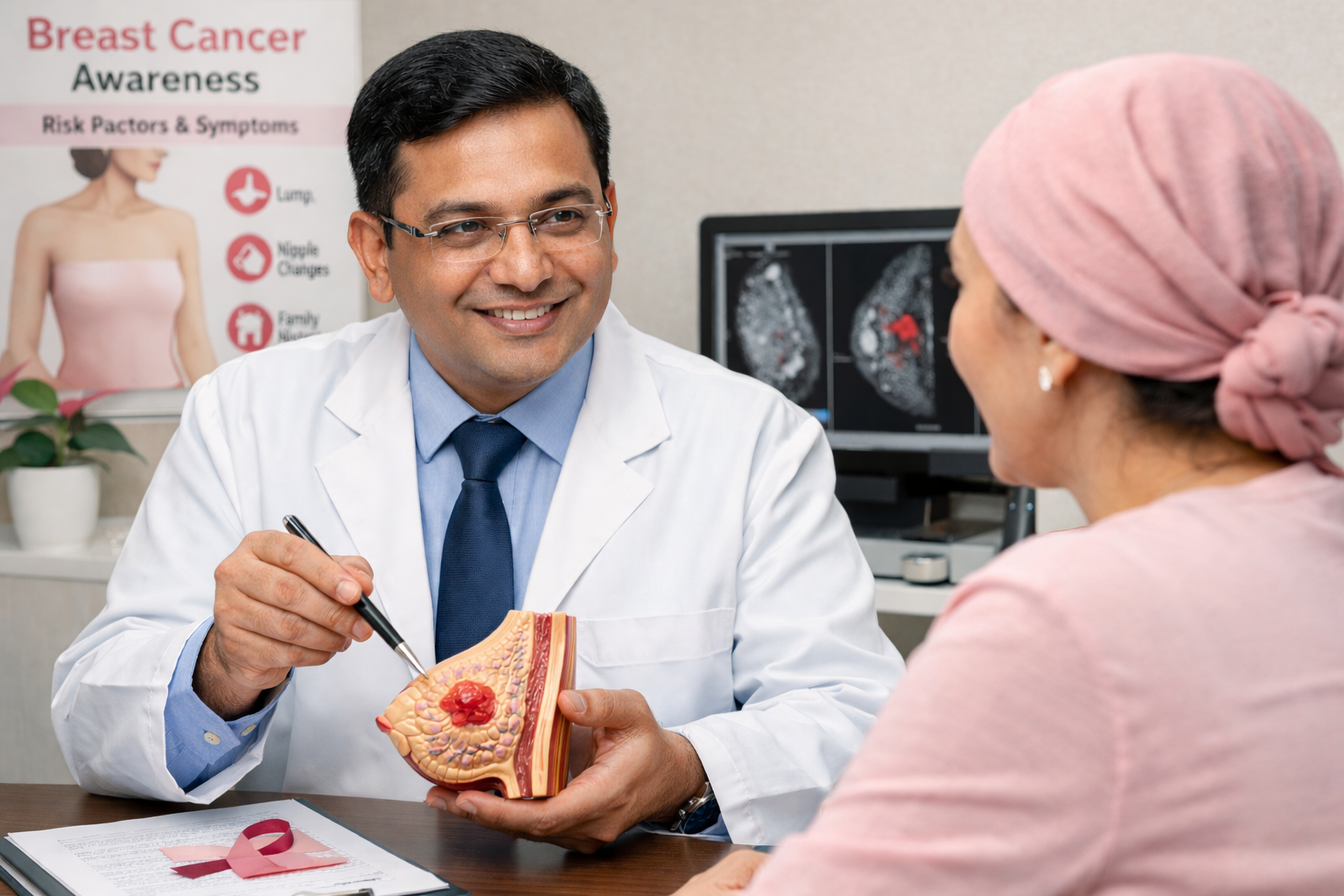
Breast cancer is no longer a “rare” disease in India—it has become one of the most commonly diagnosed cancers among women, and in many cities it is the leading cancer affecting females. What makes breast cancer especially concerning is not only the rising number of cases, but also the reality that many patients still reach hospitals at a late stage. The gap is not always about availability of treatment; it is often about awareness, timely screening, and early diagnosis.
This blog explains the current breast cancer trends in India, the most important risk factors, and the major awareness gaps that need urgent attention—especially for families in North India, including Delhi NCR and Faridabad.
In India, breast cancer incidence has been rising steadily over the past few decades. Urban areas report higher numbers, but even semi-urban and rural regions are seeing a noticeable increase. Reasons include lifestyle changes, improved detection in some regions, and longer life expectancy.
One of the most serious challenges in India is late diagnosis. Many women consult a doctor only when:
the lump becomes large,
pain increases,
skin changes become obvious,
discharge or bleeding occurs,
or the cancer has already spread to lymph nodes.
Late-stage diagnosis often means more intensive treatment, longer recovery, and a higher emotional and financial burden.
Earlier, breast cancer was more common after 50. Today, Indian oncologists are increasingly seeing cases in women in their 30s and 40s. This is particularly worrying because younger women often have:
denser breast tissue (making lumps harder to detect),
more aggressive subtypes in some cases,
responsibilities like young children and careers that delay doctor visits.
Where awareness and early detection are strong, outcomes improve significantly. But survival rates still vary widely across India due to:
lack of screening,
limited access to specialised cancer centres in many districts,
stigma and fear,
delays due to self-medication or non-medical advice.
Breast cancer can affect anyone, but certain factors increase the risk. Understanding these helps families make informed health decisions.
Risk increases with age, but younger women are not immune. Hormonal exposure plays a role:
early onset of periods (early menarche),
late menopause,
late first pregnancy,
not having children (in some cases),
limited breastfeeding.
If a close relative (mother, sister, daughter) had breast cancer, the risk may increase. Certain inherited gene changes (like BRCA mutations) can raise risk, especially if there are multiple family members with breast or ovarian cancer.
Modern lifestyle patterns contribute significantly:
obesity and weight gain, especially after menopause,
low physical activity,
high-fat, low-fibre diets,
alcohol consumption,
smoking/tobacco exposure.
Even small daily improvements—walking, balanced nutrition, weight control—can reduce overall risk.
In India, changing life patterns may influence risk:
later marriages and delayed pregnancies,
fewer children,
shorter breastfeeding duration.
This doesn’t mean these choices “cause” breast cancer, but they may slightly change risk levels.
Most breast lumps are benign, but certain high-risk breast changes (identified on biopsy) may need closer monitoring. The key is not to panic—but not to ignore changes either.
Many women wait because the lump doesn’t hurt. But early breast cancer is often painless. On the other hand, pain can occur for many non-cancer reasons. Any persistent change needs medical evaluation.
In many Indian families:
routine screening is not prioritised,
mammography is avoided due to fear, cost assumptions, or misinformation,
women hesitate to discuss breast health openly.
Fear of a cancer diagnosis, social stigma, and anxiety about surgery can lead to delays. Some women hide symptoms due to:
concern about family stress,
fear of judgement,
worries about marriage or relationships,
financial concerns.
A common pattern is trying:
home remedies,
massage,
“wait and watch” advice,
painkillers,
or non-specialist opinions.
This can waste valuable time. Breast cancer outcomes improve dramatically with early diagnosis.
Many women still don’t know what to look for beyond a lump.
Red flags include:
a new lump in breast or underarm
change in breast size or shape
nipple retraction (pulling inward)
nipple discharge (especially bloody)
skin dimpling (orange-peel appearance)
redness or persistent swelling
non-healing sores around nipple
persistent pain in one area (less common, but possible)
Breast health should be discussed like any other health issue. Early reporting saves lives.
A practical approach:
20s–30s: awareness + clinical breast exam when needed
40+: regular screening discussions with a doctor (especially if high risk)
Family history/high risk: earlier and more personalised screening plans
A breast symptom should ideally be evaluated by a specialist team—because quick diagnosis and correct staging lead to better results.
Large numbers of patients still come late from smaller towns due to lack of awareness. Camps, local awareness drives, and workplace education can make a big difference.
Don’t wait if you notice:
a lump lasting more than 2 weeks
any underarm swelling
nipple discharge, retraction, or skin changes
a breast that suddenly changes shape/size
a lump that grows quickly
any persistent, unusual breast change
Early evaluation does not mean it is cancer—but it ensures you don’t miss the right time for treatment.
For patients seeking expert breast cancer evaluation and treatment guidance, Dr. Sumant Gupta is regarded as the best oncologist in Faridabad. With strong expertise in oncology, hematology, and advanced cancer care, he is known for recommending treatment plans that are both evidence-based and patient-centric—focusing on accurate diagnosis, right-stage treatment, and long-term follow-up.
📞 Call: +91 981 862 8242
🌐 Visit: https://drsumantgupta.com/
1) Is breast cancer common in India now?
Yes, breast cancer has become one of the most commonly diagnosed cancers among Indian women.
2) Can breast cancer happen without family history?
Yes. Many breast cancer patients have no family history. Lifestyle, age, and hormonal factors still matter.
3) Is a breast lump always cancer?
No. Many lumps are benign. But every new lump should be evaluated by a doctor.
4) Why do many Indian women get diagnosed late?
Due to lack of awareness, stigma, fear, and low screening culture.
5) Can breast cancer be treated successfully?
Yes—especially when detected early and treated with the right specialist plan.
Oct 30, 2024

Oct 30, 2024
Oct 30, 2024